Traveling Talks
ייִדישלאַנד אַרום דער װעלטJourney Through Yiddish Culture—See Where We're Going Next!
We would love to hear from you! If you are interested, feel free to fill out this form and we will contact you.
We would love to hear from you! If you are interested, feel free to fill out this form and we will contact you.
Yiddish language and culture are seemingly unquenchable springs of inspiration for the analytical and the creative mind. Contemporary artists are able to draw from these multifaceted texts, images and memories to create meaningful art today.

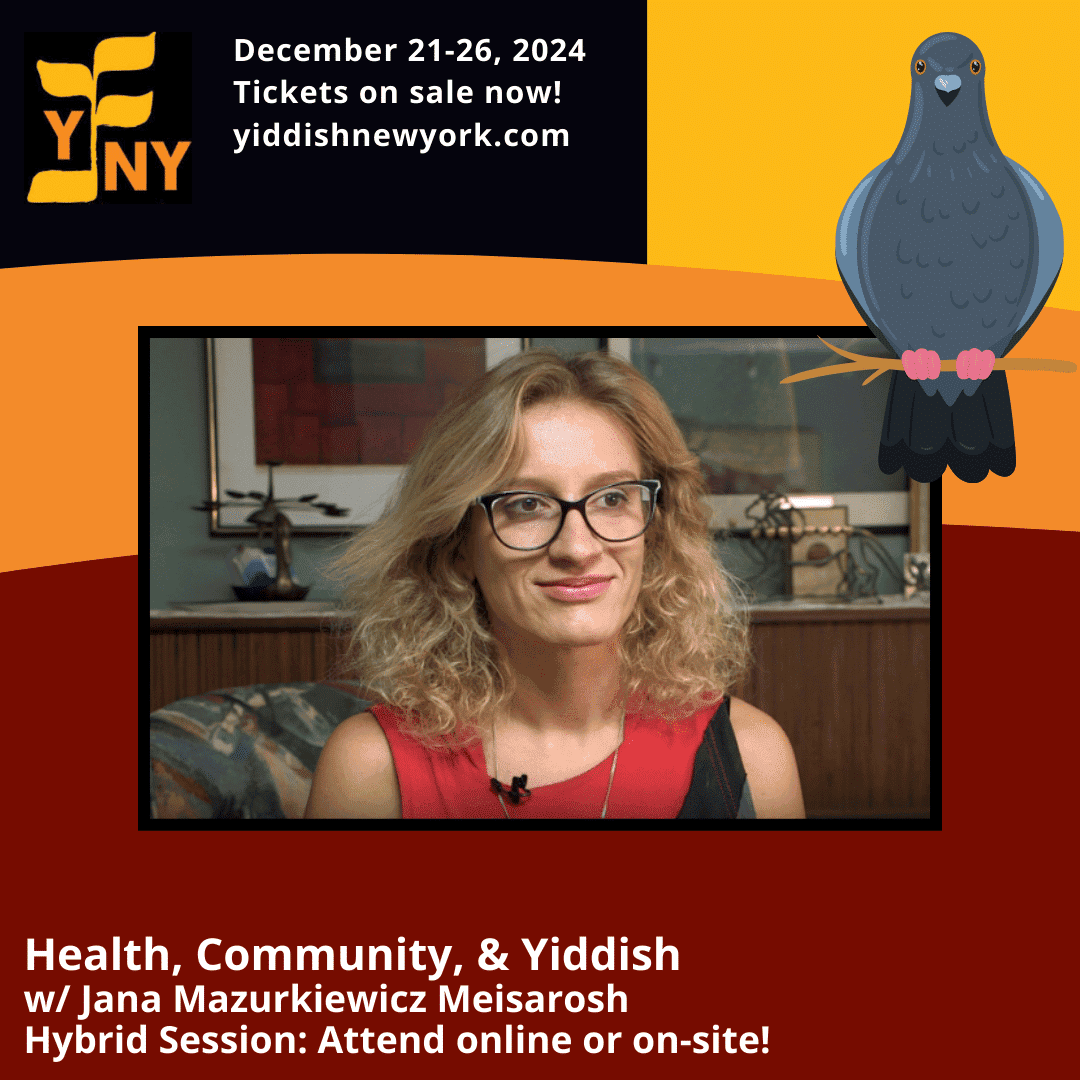
Presenter: Jana Mazurkiewicz Meisarosh
Jana Mazurkiewicz Meisarosh The founder of the Yiddish Arts and Academics Association of North America (YAAANA) – will take you through a brief history of Yiddish, Yiddishland, and the imperative of its legacy for imagining a sustainable creative community.
Presenter: Jana Mazurkiewicz Meisarosh
Jana Mazurkiewicz Meisarosh The founder of the Yiddish Arts and Academics Association of North America (YAAANA) – will take you through a brief history of Yiddish, Yiddishland, and the imperative of its legacy for imagining a sustainable creative community.
“Puedes sacar a un judío de un shtetl pero no puedes sacar un shtetl de un judío.”
“You can take a Jew out of a shtetl but you can’t take a shtetl out of a Jew.”
Yiddish Theater
Explore the rich tradition of Yiddish theater and its role in preserving Jewish culture, language, humor, and storytelling across generations. This topic examines the development of Yiddish performance arts in Eastern Europe and later in immigrant communities around the world, including the influence of theater on Jewish identity, music, literature, and community life.
The presentation also highlights famous playwrights, actors, musical traditions, and the social impact of Yiddish theater as both entertainment and cultural preservation.
History of the Shtetls
Learn about the daily life, traditions, customs, and community structure of Jewish shtetls in Eastern Europe. This topic explores religious life, education, family traditions, markets, celebrations, and the cultural atmosphere that shaped generations of Yiddish-speaking Jewish communities.
The talks also discuss migration, historical challenges, and the lasting influence of shtetl culture on Jewish history, literature, and memory.
Jewish Life in Mexico
Discover the history and cultural experiences of Jewish communities in Mexico, including migration stories, preservation of traditions, community institutions, and the relationship between Jewish identity and local culture.
This topic explores how Jewish communities contributed to Mexican society while maintaining connections to Yiddish language, heritage, education, and cultural life across generations.
Some of Our Past Talks
NYC, New York
Colorado, Denver
Boston, Massachusetts

Marbella, Spain

Białystok, Poland
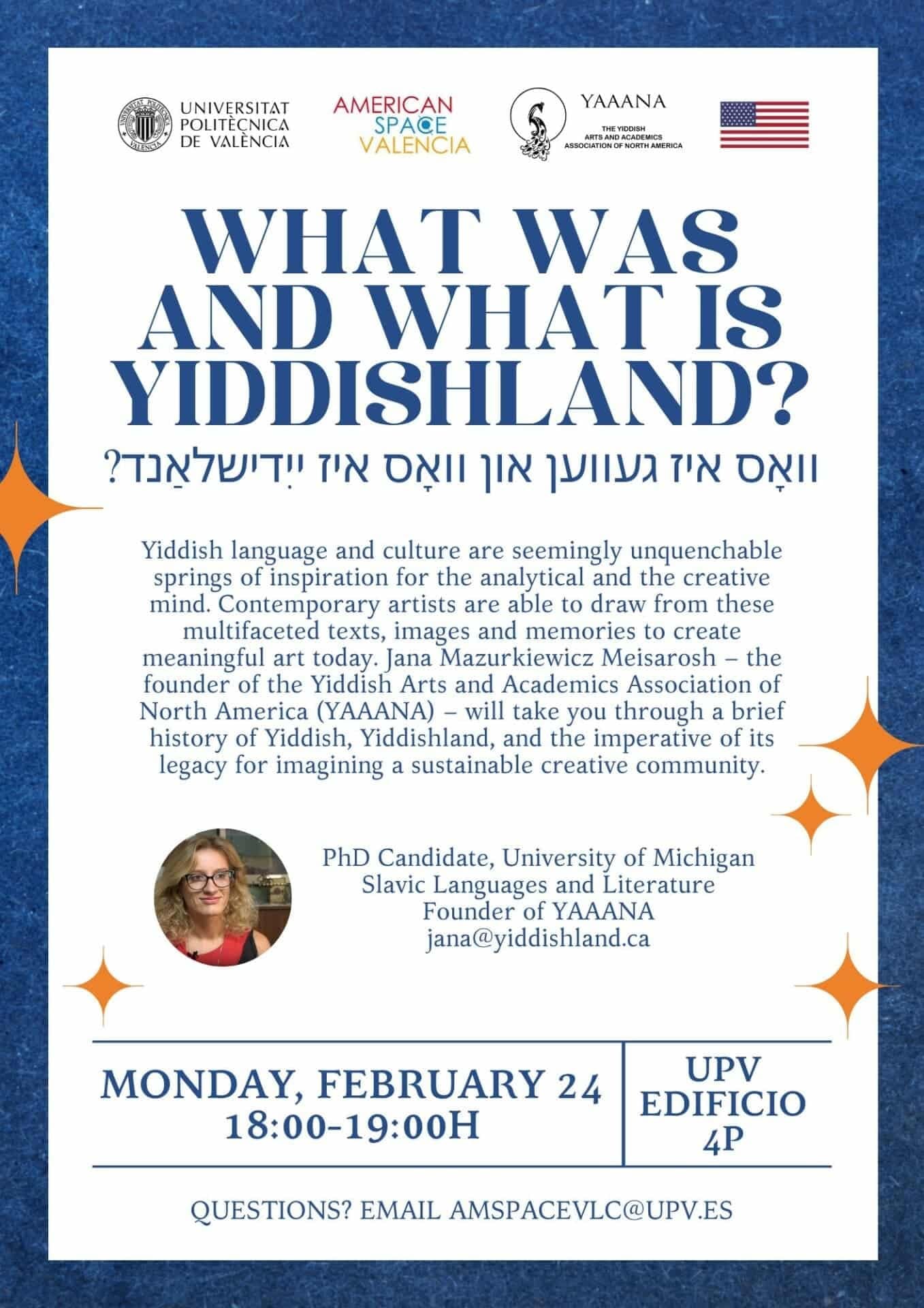
Valencia, Spain

Phoenix, Arizona

Santa Fe, New Mexico

Phoenix, Arizona

Tucson, Arizona

Cabo San Lucas, Mexico

Jewish Historical Society of Michigan

Warsaw, Poland

Kraków, Poland

Pińczów, Poland
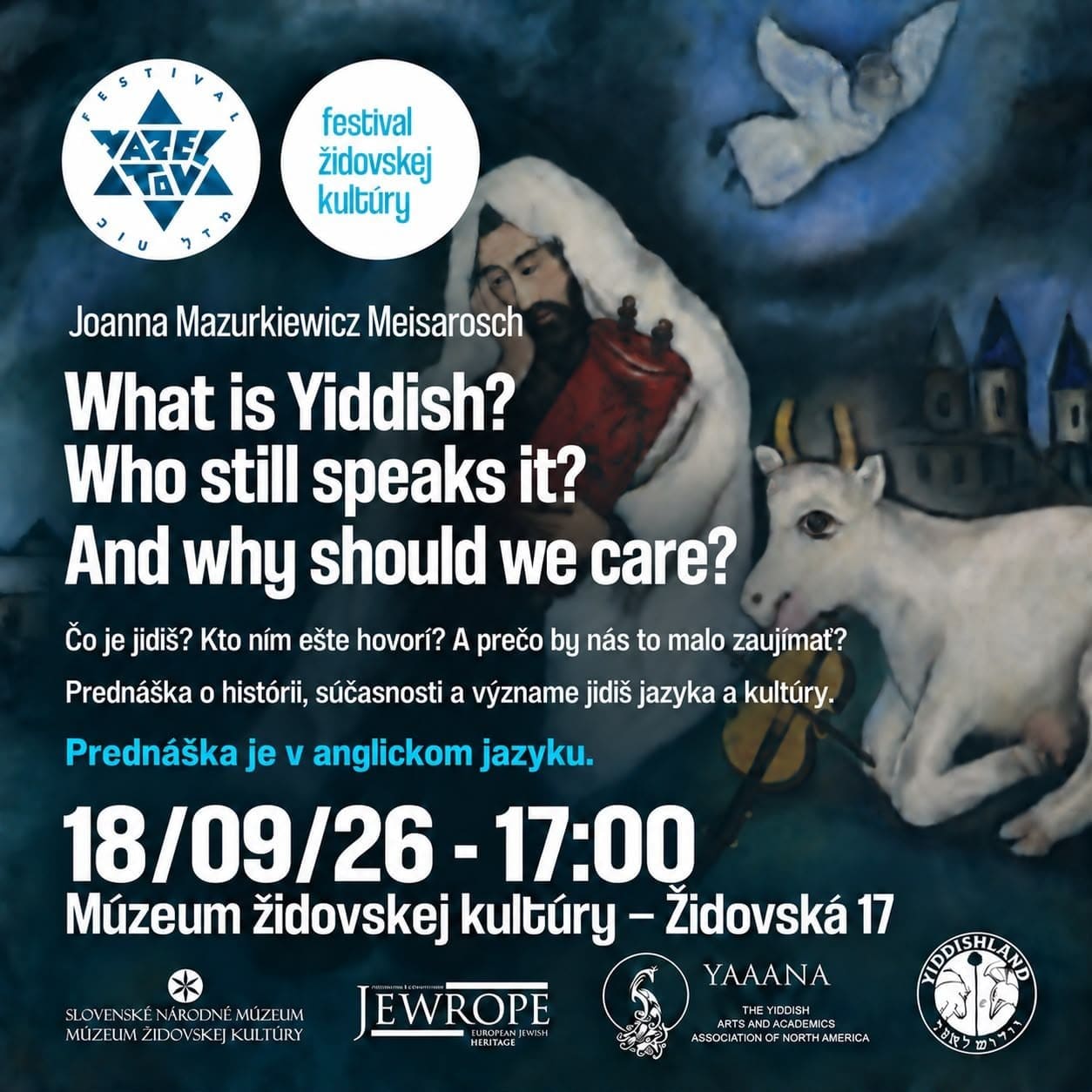
Bratislava, Slovakia

Brno, Czech Republic
Please visit our
Location:
Temple Beth Shalom,
Santa Fe,
New Mexico
Date & Time:
April 25 2025
05:00 PM
Location:
Temple Beth Shalom of East Valley,
Phoenix,
Arizona
Date & Time:
April 27 2025
07:00 PM
Location:
Desert Foothills Library,
Phoenix,
Arizona
Date & Time:
April 28 2025
11:00 AM
Location:
Tucson Jewish Museum & Holocaust Center,
Tucson,
Arizona
Date & Time:
April 29 2025
01:00 PM

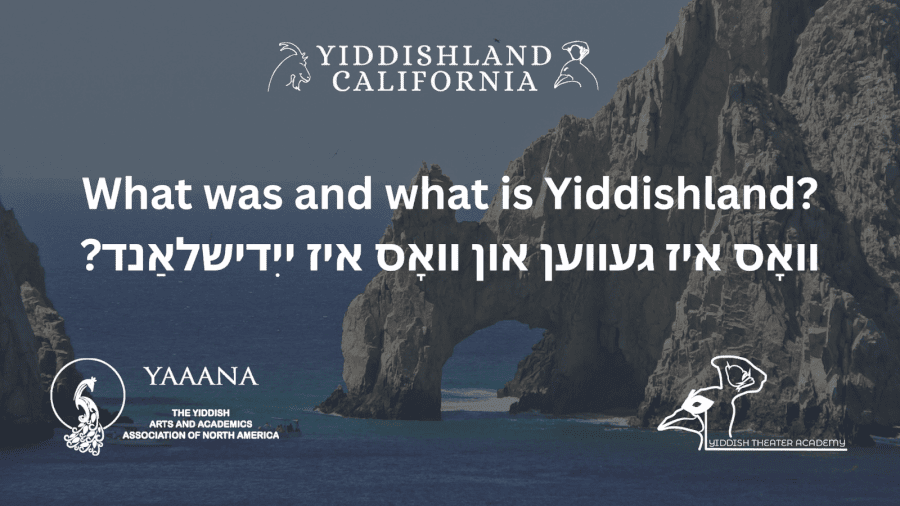
What Was and What is Yiddishland?
?װאָס איז געװען און װאָס איז ייִדישלאַנד
Yiddish language and culture are seemingly unquenchable springs of inspiration for the analytical and the creative mind. Contemporary artists are able to draw from these multifaceted texts, images and memories to create meaningful art today. Jana Mazurkiewicz Meisarosh – founder of the Yiddish Arts and Academics Association of North America (YAAANA) – will take you through a brief history of Yiddish, Yiddishland, and the imperative of its legacy for imagining a sustainable creative community.
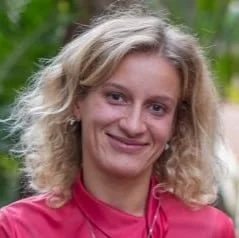
Jana Mazurkiewicz Meisarosh is a PhD candidate in the Slavic Department at the University of Michigan, Ann Arbor. She is working on her dissertation on Yiddish theater in Communist Warsaw. Originally from Poland, Jana holds a Master of Arts degree in Polish Philology and Jewish Studies from the University of Wrocław. Jana is not only a practicing academic, but also an active theater artist and critic. She is an actor, director, playwright, and producer of Yiddish theater. In October 2017, she moved to San Diego and launched the Yiddish Arts and Academics Association of North America (YAAANA).
What Was and What is Yiddishland?
?װאָס איז געװען און װאָס איז ייִדישלאַנד
Yiddish language and culture are seemingly unquenchable springs of inspiration for the analytical and the creative mind. Contemporary artists are able to draw from these multifaceted texts, images and memories to create meaningful art today. Jana Mazurkiewicz Meisarosh – founder of the Yiddish Arts and Academics Association of North America (YAAANA) – will take you through a brief history of Yiddish, Yiddishland, and the imperative of its legacy for imagining a sustainable creative community.
Jana Mazurkiewicz Meisarosh is a PhD candidate in the Slavic Department at the University of Michigan, Ann Arbor. She is working on her dissertation on Yiddish theater in Communist Warsaw. Originally from Poland, Jana holds a Master of Arts degree in Polish Philology and Jewish Studies from the University of Wrocław. Jana is not only a practicing academic, but also an active theater artist and critic. She is an actor, director, playwright, and producer of Yiddish theater. In October 2017, she moved to San Diego and launched the Yiddish Arts and Academics Association of North America (YAAANA).